
When the seasons change, your appetite, sleep and eating patterns may change too.
As daylight decreases and the weather becomes colder, some people notice changes in their mood, energy, sleep and appetite. They may feel less motivated, sleep longer, crave sweets and carbohydrates, or turn to food for emotional comfort.
These changes are not necessarily a matter of poor discipline or lack of willpower. They may be associated with Seasonal Affective Disorder (SAD), a form of depression with a recurring seasonal pattern.
Understanding the relationship between seasonal mood changes, appetite and eating behaviour can help us respond with awareness rather than guilt.
What Is Seasonal Affective Disorder (SAD)?
Seasonal Affective Disorder is a type of depression in which symptoms follow a recurring seasonal pattern. It most commonly occurs during autumn and winter, although some people experience symptoms during spring or summer.
Reduced daylight is thought to contribute to changes in the body’s circadian rhythm and the regulation of serotonin and melatonin, which are involved in mood and sleep.
Common symptoms of winter-pattern SAD include:
- Persistent low mood or sadness
- Reduced energy and motivation
- Loss of interest in activities
- Sleeping more than usual
- Increased appetite and weight gain
- Cravings for carbohydrate-rich and sweet foods
- Social withdrawal and difficulty concentrating
The National Institute of Mental Health (NIMH) recognises oversleeping, weight gain, social withdrawal and carbohydrate cravings as symptoms associated with winter-pattern SAD.
Why Do Food Cravings Increase During Seasonal Depression?
Seasonal changes can influence eating behaviour through several interacting factors.
A 2020 systematic review published in Frontiers in Psychology examined the relationship between SAD, diet and eating behaviour. It reported associations with emotional eating, carbohydrate cravings, evening snacking and binge-eating tendencies. However, the available evidence was limited and did not establish a specific dietary treatment for SAD.
Why might these changes occur?
- Emotional comfort through food
When mood is low, some people turn to food for temporary comfort or emotional relief. Sweet and carbohydrate-rich foods may become particularly appealing.
- Changes in sleep patterns
Oversleeping, disrupted sleep and changes in daily routines can affect appetite regulation and eating schedules. Tiredness may also make food choices more difficult to manage.
- Changes in biological rhythms
Reduced exposure to daylight may affect circadian rhythms and the regulation of melatonin and serotonin. These processes are associated with sleep and mood, although the precise biological mechanisms behind SAD are not completely understood. Food can therefore become more than a source of nourishment. For some individuals, it may also become a way of coping with difficult emotions.
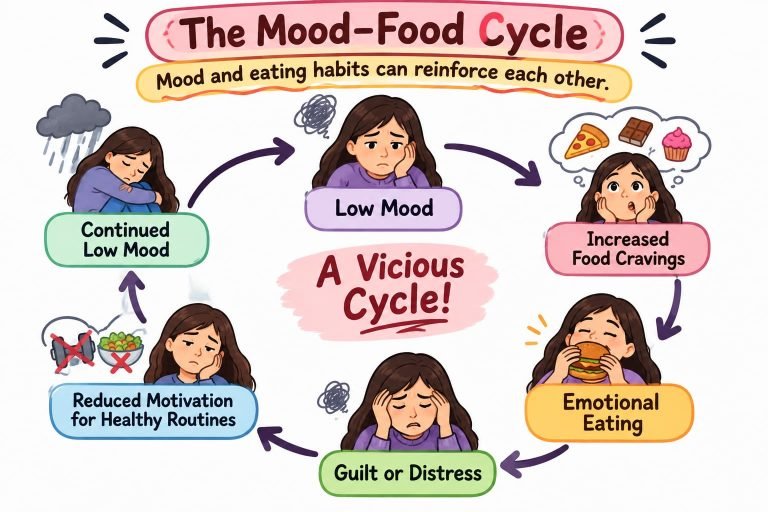
4. Mood and eating habits can reinforce each other.
This pattern may become difficult to break, particularly when poor sleep, inactivity and social withdrawal occur alongside changes in appetite.
However, it is important to understand that unhealthy eating does not necessarily cause seasonal depression. Rather, changes in mood, appetite, sleep and eating behaviour can interact.
The solution is not to blame yourself, but to understand the pattern and address it with appropriate support
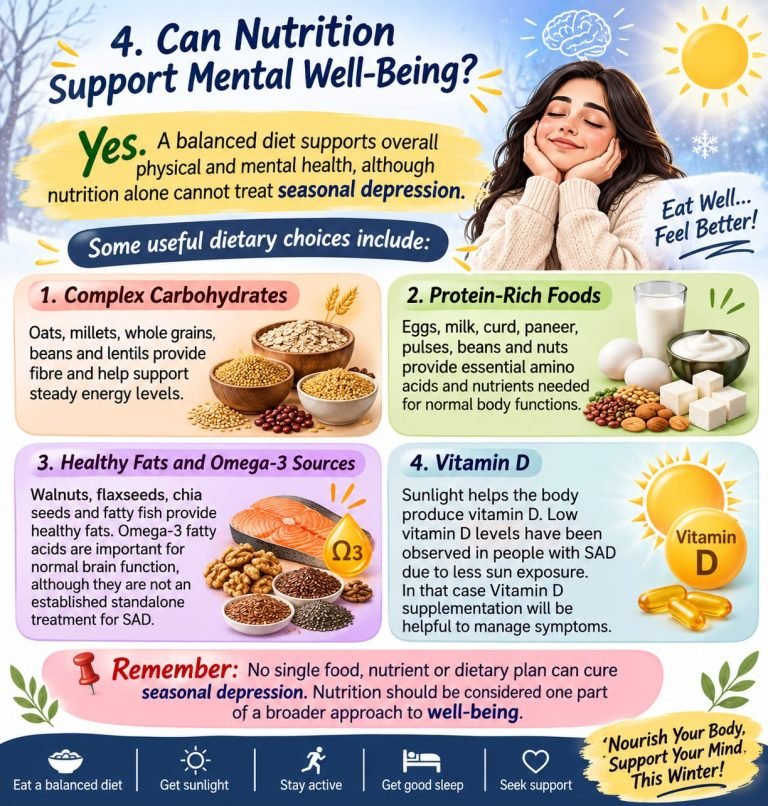
Can Nutrition Support Mental Well-Being?
Yes!! A balanced diet supports overall physical and mental health, although nutrition alone cannot treat seasonal depression.
Practical Ways to Break the Mood–Food Cycle
Instead of following restrictive diets or blaming yourself for cravings, focus on small, sustainable habits.
- Maintain regular meals: Include protein, fibre-rich carbohydrates, vegetables and healthy fats to support balanced nutrition.
- Recognise emotional eating: Before reaching for food, pause and ask yourself whether you are physically hungry, tired, stressed, bored or lonely.
- Get natural daylight: Spend time outdoors during the daytime and maintain regular exposure to natural light.
- Stay physically active: Walking, yoga, stretching and other enjoyable activities can support mood and overall health.
- Maintain a consistent sleep schedule: Try to keep regular sleeping and waking times.
- Stay socially connected: Continue interacting with friends, family and supportive people rather than withdrawing.
- Seek professional support: Evidence-based treatments for SAD include cognitive behavioural therapy adapted for SAD (CBT-SAD), light therapy and medication when clinically indicated.
You cannot control the changing seasons, but you can build routines that support your well-being through them.
Be mindful of what you eat, how you sleep, how you move and how you respond to your emotions. Because mental well-being is not built on a plate alone. It is nurtured by how we eat, sleep, move, connect and care for ourselves.
From the Desk of
Ms Tanveet Kaur Anand
Clinical Psychologist (RCI) & Psychiatric Nutritionist